
TL;DR: Jamaica's athletics squad for the Glasgow 2026 Commonwealth Games is headlined by Shericka Jackson, but two of the country's biggest sprint names, Kishane Thompson and Oblique Seville, are not on it. West Indies just won a Test by an innings and 217 runs, and Guyana is about to host Caribbean basketball's return after a seven-year gap. Three sports, one same story: the Caribbean's advantage now depends less on who is missing and more on whether the depth behind them was ever mapped in the first place.
The Squad Jamaica Is Actually Sending
Start with who is going. Shericka Jackson, a two-time world 200m champion and five-time Olympic medallist, headlines the roster, and her inclusion strengthens what is already one of the most feared women's 4x100m relay squads in the Commonwealth. Antonio Watson, the 2023 world 400m champion, takes charge of the men's one-lap events. Ackeem Blake, Rohan Watson, Christopher Taylor and Roshawn Clarke anchor the men's sprint group. Demario Prince, fresh off his first national hurdles title, leads the men's sprint hurdles, with Jerome Campbell, runner-up at the national championships and a 2025 World Championships finalist, chasing him down.
The field events carry just as much firepower. Tajay Gayle, the 2019 world long jump champion and 2025 world silver medallist, headlines the horizontal jumps alongside Fedrick Dacres, an Olympic finalist and the 2018 Commonwealth champion. Lamara Distin returns as the reigning Commonwealth high jump champion, Ackelia Smith is doubling in the long and triple jump, and Romaine Beckford arrives as the national high jump champion. Athletics at Glasgow 2026 runs from 24 July to 2 August, and on paper this is a squad built to keep Jamaica near the top of the medal table.
The Two Names Everyone Is Asking About
None of that changes the question every Jamaican sports fan has been asking since the team was announced: where are Kishane Thompson and Oblique Seville? Both are absent from the Glasgow roster. Thompson did not race at the national championships, the meet that doubled as Commonwealth Games trials, and Seville is missing from the sprint list too. Jamaica's federation has not laid out every reason in public, and SportsBrain is not in the business of guessing at private medical detail. What the pattern does look like, from the outside, is a programme managing load through a long season rather than gambling two of its biggest assets on a July meet in a year with an Olympic cycle still building toward Los Angeles.
That is a defensible call. It is also a stress test. A federation only finds out how deep its bench really is when the headline names are not walking out for it.
What the Depth Chart Under the Depth Chart Looks Like
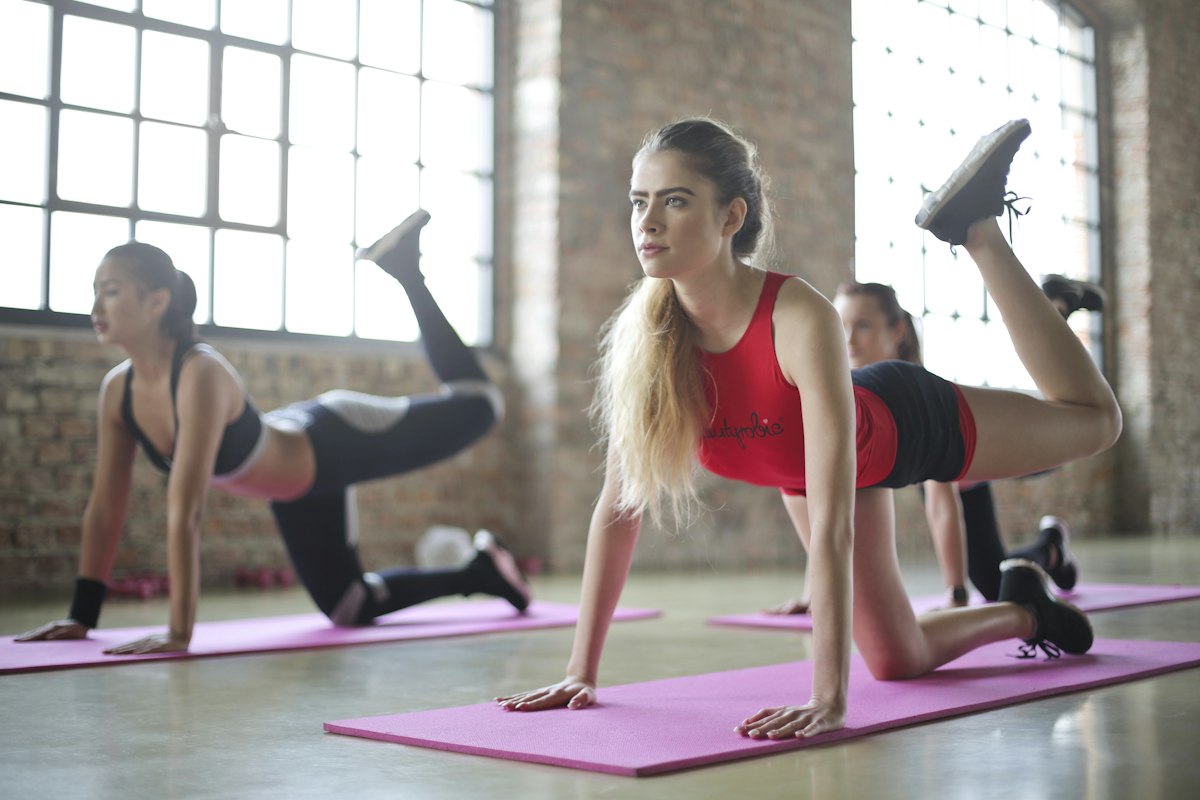
This is where the AI talent question actually matters, and it is a different question from the one most fans ask. It is not "who replaces Kishane Thompson." Nobody replaces a sub-9.80 sprinter overnight. The real question is whether the next four or five athletes behind him were ever tracked with the same rigour as the athlete at the top. SportsBrain's talent discovery tools exist for exactly that gap: biometric assessment, movement analysis, and predictive modelling applied from primary school meets through national programmes, so a federation is not relying on a handful of scouts covering an island by memory and reputation. A depth chart built on data does not panic when one name is unavailable, because it already knows who is closing the gap and how fast.
Prescriptive injury prevention is the other half of the same picture. Instead of waiting for a strain to show up on a scan, load-monitoring systems flag the training pattern that tends to produce one, days before it happens, and prescribe the specific adjustment that avoids it. Whatever kept Thompson and Seville off the trials start line, the broader lesson for every Caribbean federation is the same: an athlete who is managed through a heavy season on data, rather than raced until something gives, is more likely to be standing on a Los Angeles start line in 2028 than one who is not.
It Is Not Just Track: Caribbean Sport's Big July
Zoom out from athletics and the same week tells the same story twice more. West Indies beat Sri Lanka by an innings and 217 runs in the first Test, and the second Test began at North Sound, Antigua, on 3 July, the very day this article is being written. That is not a scratchy, backs-against-the-wall win. That is a Test side imposing itself completely, with Roston Chase captaining the Test side and Shai Hope leading the white-ball teams, and it comes as Cricket West Indies leans harder on data analysis and player-monitoring tools across a packed home season against Sri Lanka, New Zealand and Pakistan. A five-match ODI series against New Zealand follows in the same month, split between Providence and Bridgetown, which means the region's bowlers and batters are stacking match load on top of match load with almost no gap to recover in between.
Basketball gets its own moment too. Guyana hosts the FIBA Men's Caribbean Championship from 8 to 12 July at the Cliff Anderson Sports Hall in Georgetown, a tournament returning after a seven-year hiatus and a ten-team field split across two groups. Guyana last hosted the competition in 1994 and staged the very first edition back in 1981, so the return carries genuine weight locally, not just for the host nation's own campaign but for a wider basketball region that has produced NBA talent without ever having the consistent regional stage to match. None of these three stories, track, cricket, basketball, is really about a single result. They are about whether a region with a fraction of the sports-science budget of Australia, England or the United States can turn one good year into a permanent floor rather than a peak that fades the moment a star retires or an event moves on.
The AI Layer Underneath All of It
SportsBrain was built by brothers Adrian Dunkley and Nicholas Dunkley in Jamaica as the first AI Sports Lab in Latin America and the Caribbean, and its platform is deliberately sport-agnostic for exactly this reason: the same performance analytics, AI Agent Coach, and prescriptive injury prevention tools that support a sprinter's periodisation also support a fast bowler's workload or a point guard's minutes. Adrian Dunkley's other company, StarApple AI, was the Caribbean's first AI company, founded in 2019, and his full profile and research background is at adriandunkley.net. The connective tissue between a Glasgow relay squad, a North Sound Test win and a Georgetown basketball hall is the same infrastructure question: does the region have the data pipeline to keep producing this level of performance once the current generation of stars moves on.
Adrian and Nicholas Dunkley have said publicly that the goal is not one golden generation. It is a structure that keeps producing golden generations, in track, in cricket, in basketball, in netball, without needing a Bolt or a Lara or a Jackson to carry the whole story alone. Part of building that structure long before an athlete ever reaches a Commonwealth Games start list is identifying and nurturing potential early, the same mission that drives youth-focused education and talent work at sister initiative The Genius Project.
Why Glasgow Is the Real Test
Jamaica will almost certainly win medals in Glasgow. Shericka Jackson, Antonio Watson and Tajay Gayle are not a weakened squad by any reasonable measure, and a Commonwealth Games without Australia's or England's absolute strongest sprint rosters is still winnable territory for the depth Jamaica is sending. But the number that actually matters to SportsBrain is not the medal count from 24 July to 2 August. It is what happens in 2027 and 2028, when the current wave of Jamaican sprinters ages out and the next Kishane Thompson has to already be in the system, tracked, trained and ready, rather than discovered by accident at a parish meet nobody scouted properly. That is the pipeline problem AI is built to solve, and Glasgow, missing stars and all, is as good a live test of it as the region will get this year.
There is a version of this story where two absent sprinters becomes the whole headline and the squad that is actually travelling gets treated as an afterthought. That would be the wrong read. Jamaica has been here before: a marquee name sits out a cycle, the programme keeps producing medals anyway, and the explanation, every time, comes back to depth built years earlier rather than talent discovered on the morning of the final. The difference now is that depth can be measured instead of assumed. A federation that knows, with data, which sixteen-year-old at which parish meet is running times that matter is not gambling on a golden generation showing up again by luck. It is choosing to keep producing one on purpose, in track and field, in cricket, in basketball, in every sport the Caribbean already loves and has never had the resources to fully professionalise.
Frequently Asked Questions
Why are Kishane Thompson and Oblique Seville not competing at the 2026 Commonwealth Games?
Both were absent from the Jamaican team named for Glasgow 2026. Thompson did not compete at Jamaica's national championships, which doubled as Commonwealth Games trials, and neither he nor Seville appears on the roster headlined by Shericka Jackson. Jamaica's federation has not detailed every absence publicly, and SportsBrain is not guessing at private medical information, but the pattern fits a season built around careful load management rather than a July gold rush.
When does athletics start at the Glasgow 2026 Commonwealth Games?
The athletics programme runs from 24 July to 2 August 2026 in Glasgow, Scotland, according to the official Commonwealth Games schedule.
Who is Jamaica's leading athlete at Glasgow 2026?
Shericka Jackson headlines the squad. She is a two-time world 200m champion and five-time Olympic medallist, and her presence strengthens Jamaica's women's 4x100m relay. Antonio Watson, the 2023 world 400m champion, leads the men's one-lap events, and Tajay Gayle, the 2019 world long jump champion and 2025 world silver medallist, headlines the horizontal jumps.
How does AI help identify the next generation of Caribbean sprinters?
SportsBrain's AI talent discovery tools use biometric assessment, movement analysis and predictive modelling from primary school level through national programmes. Instead of relying on a handful of scouts covering an entire island, the system builds a depth chart across every parish and school meet, so a federation knows who is ready to step up long before a star athlete is unavailable.
Is West Indies cricket also in form this July?
Yes. West Indies won the first Test against Sri Lanka by an innings and 217 runs, and the second Test began at North Sound, Antigua, on 3 July 2026, the same week the Commonwealth Games squad was preparing for Glasgow.
What does SportsBrain actually build for Caribbean sport?
SportsBrain is the first AI Sports Lab in Latin America and the Caribbean, built in Jamaica. Its platform covers AI talent discovery, performance analytics, an AI Agent Coach, prescriptive injury prevention, anti-doping intelligence, and affordable sports nutrition AI, serving football, track and field, cricket, netball, swimming and basketball across the region.